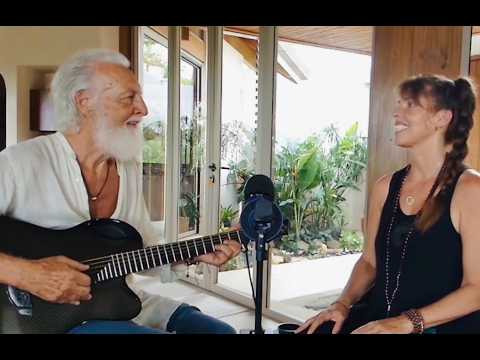
Sound healing is a qigong practice that uses vocal vibration and intention to access energy at the organ and subconscious levels, bypassing the limitations of purely mental or meditation-based approaches. Unlike other modalities, sound healing works directly with the body's vibrational frequencies to simultaneously purify personal organs and extend healing intention to family, community, and the planet. The practice requires no prior experience and can be performed sitting, standing, or lying down, making it accessible to practitioners of any background or physical ability.
What is sound healing in the qigong tradition?
Sound healing represents a distinct pathway within qigong practice that leverages vibrational frequencies to shift energy at multiple levels simultaneously. According to Master Mingtong Gu, who is named Qigong Master of the Year by the 13th World Congress on Qigong and Traditional Chinese Medicine, sound healing differs fundamentally from purely mental or meditative approaches. While visualization and contemplation have their place, "the sound healing allow you to access yeah deeper subconscious realm including your organ in your body directly vibrationally" (0:402). This directness is the key advantage: sound bypasses the filters of intellectual analysis and reaches tissues, organs, and psychological material that mental work alone often cannot touch.
The practice originates within Wisdom Healing Qigong, a system founded by Dr. Pang Ming that bridges Western medicine, Traditional Chinese Medicine, and qigong esoteric practice. Gu emphasizes that sound healing is "often unknown even to the qigong world" (0:360), despite its power. The mechanism is straightforward: when you produce sound and direct it with intention, you create a vibration that resonates through your body's tissues and energy meridians. This vibration simultaneously carries healing intention inward (to your own organs and subconscious) and outward (as a ripple extending to others and the planet).
How does sound healing connect to the concept of oneness?
Central to Mingtong Gu's teaching is the idea that qigong and sound healing are expressions of a universal spiritual principle: oneness. He frames this not as modern invention but as ancient wisdom: "it's ancient it's ancient um Vision it's ancient knowledge in the way wisdom knowing that we all win" (0:140). This oneness has multiple dimensions—it includes the union of mind, body, and heart within a single person, and it extends to the connection between the individual and the entire planet.
The more a person cultivates the experience of oneness through practice, Gu teaches, the more capacity they access—both for personal healing and for service to the collective. "More we cultivating the experience of Oneness energetically more we able to access the deeper capacity a mind body heart as one person as individual for own heal house and happiness fulfillment of life but also more we able to access the greater capacity as Community as planet Earth as connection of life in general" (0:188). This is not metaphorical. By performing sound healing with awareness of connection to family, community, and the planetary body, practitioners amplify the reach and coherence of their intention.
Gu invites practitioners to hold a visualization while making sound: imagine the heavenly energy beaming down around you and the planet, purifying all realms. "Every dripping of snow each H become a blessing become a purification yeah for all realm on the planet Earth yeah" (0:530). The sound becomes a vehicle for this purification intention, extending outward as "a ripple to the planet Earth" (0:360) while simultaneously working inward on personal organs and emotions.
What are the primary organs activated through sound healing?
Sound healing in Wisdom Healing Qigong works with specific organs, each associated with distinct emotional and energetic qualities. During the practice Gu leads, the first sound is associated with the heart. He states: "we're activating the energy of the heart" (1:289) and invites practitioners to connect collectively: "now connecting with all the hearts" (1:358). This is significant because the heart in qigong cosmology is not merely a physical pump but the seat of consciousness, joy, and spiritual connection.
As the practice unfolds, other sounds address different organs and their associated emotional transformations. For instance, the practice involves "transforming fear to" (1:625) through sound work targeting organs traditionally linked to fear in Chinese medicine (such as the kidneys). Another sequence engages "the heart nourishing the" (1:983) and continues with "energy digesting transforming" (2:085), indicating work with the digestive system and the transformation of stuck emotional energy. The water element within the body is also engaged, as indicated by references to "water inside of" (1:881) during sound healing sequences.
The practice does not require naming or anatomically understanding every organ involved. Instead, as Gu emphasizes, the key is intention and direct sensory connection: "is focus on your intention focus on your direct connection" (0:656). The sound itself, when vocalized with awareness and visualization, naturally resonates with the organs and energy systems that need attention.
How does sound healing bypass the limitations of other practices?
Gu explicitly addresses why sound healing serves as a complement to, and sometimes superior alternative to, purely mental or seated meditation work. He notes that "slow just you know mental therapeutic work or slow meditation slow a lot of other practice we love to do which is also beneficial and yet the sound healing allow you to access yeah deeper subconscious realm including your organ in your body directly vibrationally" (0:402). This is not a dismissal of other modalities but a recognition of the unique pathway that sound opens.
The reason has to do with how the body processes information. Mental and meditative practices work through the conscious mind, which can sometimes reinforce protective mechanisms or bypass deeper material. Sound, by contrast, works at the level of vibration—a frequency language that tissues, cells, and the nervous system respond to pre-cognitively. Visualization combined with sound amplifies this effect. When you produce a vocal sound while simultaneously holding an image (such as heavenly light purifying the planet), you engage multiple sensory channels and create a coherent field that reaches more of the body's intelligence.
This directness also means sound healing requires less prior experience or sophistication. Gu stresses: "that's one of the quality of sound healing is so easy to learn does not require previous experience of taii or Chong or any you know sophistic energetic practice you can make the sound" (0:617). A beginner can benefit immediately because the body responds to vibration naturally—no years of meditation training needed.
What is the role of visualization and intention in sound healing?
Visualization is not separate from sound healing; it is integral to its power. Gu introduces a specific visualization at the beginning of the practice session: experiencing the snow falling from heaven as a metaphor for divine energy purifying the planet. "I feel like this powerful visualization the how the Heavenly energy is beaming down all around you around the planet Earth purifying the entire planet Earth and that's the visualization I want to invite you to to not only experiment but also connecting together" (0:446).
Practitioners are guided to establish a vertical connection between heaven (infinite, formless energy) and earth (grounded presence and power), with themselves at the intersection. They then extend this awareness horizontally, visualizing an ocean of pure energy in front, behind, and around them. This multidimensional awareness serves a dual function: it anchors the individual in a coherent energetic field and creates a container through which healing intention can flow.
Intention itself is understood not as wishful thinking but as a directed activation of will and attention. When Gu says "we can visualizing carry that intention just like the snow from the heaven purifying the planet Earth yeah every dripping of snow each H become a blessing become a purification" (0:530), he is teaching that intention, when held with emotional resonance and visualization, becomes a force that manifests in the energetic field and ripples outward. The sound amplifies and transmits this intention.
Can sound healing be practiced by anyone, regardless of physical ability?
One of the distinctive features of sound healing is its accessibility. Gu repeatedly emphasizes that the practice "does not require previous experience of taii or Chong" (0:617) and notes that "Qigong movements are adaptable for accessibility, gentle, and free flowing. Accompanying visualization and meditation can be done in any comfortable position—sitting, standing, or lying down."
During the teaching, Gu explicitly invites: "you can join me um either sitting or lying down or standing so you can gently placing your hands on your chest and gently close your eyes" (0:726). This means someone recovering from surgery, an elderly person with joint issues, or anyone with physical limitations can still participate fully. The practice does not depend on complex postures or cardiovascular exertion. It depends on the ability to make sound and to hold attention inward with intention.
This accessibility also extends to language and cultural background. Sound is a universal medium that transcends words. While the teaching may be delivered in English, the actual practice—the sounds themselves and the vibrational work—does not require linguistic understanding. A speaker of any language can participate and experience the effects.
What is the relationship between personal healing and planetary healing?
A central theme in Gu's teaching is that personal and planetary healing are not separate endeavors. He situates this in the context of the World Taichi and Qigong Day celebration: "it's about cultivating the energetic wisdom which is the foundation for health foundation for happiness foundation for our deeper creativity deeper capacity as human being" (0:95). But this cultivation is never only individual. The more you purify and heal your own organ system, emotional body, and consciousness, the more you extend that coherence outward.
Gu frames this in terms of a cascading expansion: individual healing leads to family healing, family healing to community healing, community healing to planetary healing. "The health of the planet Earth the health the wellbeing of our community the health the well-being of our spiritual connection of life in general" (0:231) all flow from the same source—the cultivation of energetic coherence and oneness. When thousands or millions of people participate in sound healing simultaneously, as on World Taichi and Qigong Day, the collective intention and vibration create a powerful field of purification that affects the entire planetary organism.
This is not presented as magical thinking but as a logical extension of how energy and intention work. If your vibration influences your own organs, and your consciousness influences those around you, then a coordinated global practice of sound healing naturally extends that influence to the planetary level. The snow imagery Gu uses throughout his teaching—"pouring down all around you around the planet Earth purifying the entire planet Earth"—illustrates this scalability.
What are the core practices within sound healing work?
The actual practice of sound healing involves producing specific tones while visualizing, often with hands positioned on the chest or other areas. Each sound corresponds to an organ system and an emotional quality. The practice begins with grounding and centering: establishing the vertical axis between heaven and earth, then expanding awareness horizontally to feel the presence of others and the planet.
Then, with intention set and visualization in place, practitioners begin to vocalize. The sounds themselves are simple—often single tones or syllables—but the key is the vibration felt internally and the emotional-energetic shift that occurs. As Gu teaches, "we're activating the energy of the heart" (1:289) with the first sound, then moves through other organ systems. Each sound is held with awareness, breath, and the continuing visualization of purification and blessing.
The practice is not about perfection of technique. Gu encourages: "best effort playfully" (3:034), suggesting that the healing comes not from precise vocal production but from sincere engagement, intention, and willingness to feel. The body's own wisdom responds to the vibration regardless of whether the tone is "correct" by any external standard.
Where to go from here
Sound healing offers a direct, accessible entry point for anyone seeking to engage qigong practice for personal and collective healing. Unlike modalities that require years of training or complex mental discipline, sound healing begins to work immediately through the body's natural responsiveness to vibration. Those interested in deepening this practice can explore Wisdom Healing Qigong's online courses, retreats, and the broader ecosystem of qigong teaching. The foundational principle remains consistent: cultivate coherence and purification in your own body and consciousness, hold the intention to extend that healing to others and the planet, and allow the vibrational power of sound to carry that intention. When practiced individually or collectively, sound healing becomes a bridge between personal transformation and service to the greater whole.