EveryEvent Seattle

Browse All Events

Find every event in Seattle

events

Concerts & Live Music
Festivals
Sports & Recreation
Food & Drink
Arts & Culture
Community
Family & Kids
Nightlife
Comedy
Theater
Popular Destinations
BaliSedonaLos AngelesCosta RicaNew YorkSan FranciscoAustinMiamiJoshua TreeTulum
View All CategoriesView All Destinations

Explore All Features

Powerful tools to grow your events

Platform Features

Smart Dynamic Pricing
Ticket Categories
Assigned Seating
Abandoned Cart Recovery
Visitor Recovery
Donations & Sliding Scale
Affiliate Engine
Ticket Scanner
Coupon Codes
Custom Questions
Ticket Sharing
Upsells & Add-ons
Analytics & Reporting
Email Sequences
Waitlist / Notify / Remind
Explore
Discovery HubArtists & PerformersVenuesKnowledge Base
View All FeaturesAbout Us
PricingBlog
Language
Saved events
Browse All Events

events

Concerts & Live MusicFestivalsSports & RecreationFood & DrinkArts & CultureCommunityFamily & KidsNightlife

Popular Destinations

BaliSedonaLos AngelesCosta RicaNew YorkSan Francisco

Explore

Discovery HubArtists & PerformersVenuesKnowledge Base

Platform Features

Smart Dynamic PricingTicket CategoriesAssigned SeatingAbandoned Cart RecoveryVisitor RecoveryDonations & Sliding ScaleAffiliate EngineTicket ScannerCoupon CodesCustom QuestionsTicket SharingUpsells & Add-onsAnalytics & ReportingEmail SequencesWaitlist / Notify / Remind
View All FeaturesAbout Us
PricingBlog
Log inSign UpEvent Organizers
  • Browse All Events
  • Concerts & Live Music
  • Festivals
  • Sports & Recreation
  • Food & Drink
  • Arts & Culture
  • Community
  • Family & Kids
  • Nightlife
  • All Categories →
  • Portland
  • Vancouver, BC
  • San Juan Islands
  • Olympic Peninsula
  • Leavenworth
  • All Destinations →
  • For Promoters
  • For Artists
  • For Venues
  • For Festivals
  • For Event Spaces
  • For Nonprofits
  • For Bloggers
  • For Speakers
  • Brand Ambassador
  • Case Studies
  • 350K+ Buyer Network
  • Abandoned Cart Recovery
  • Smart Dynamic Pricing
  • Ticket Categories
  • Recurring Events
  • Assigned Seating
  • Affiliate Engine
  • Waitlist / Notify
  • Ticket Scanner
  • Embed Widget
  • Event Syndication
  • Message Center
  • Integrations
  • Reports
  • All Features →
  • About
  • The Ecosystem
  • Blog
  • Glossary
  • Inspiration
  • Help Center
  • Contact
  • API Docs
  • Brand Assets
  • Careers
  • Press
  • Terms of Service
  • Privacy Policy

Events

  • Browse All Events
  • Concerts & Live Music
  • Festivals
  • Sports & Recreation
  • Food & Drink
  • Arts & Culture
  • Community
  • Family & Kids
  • Nightlife
  • All Categories →

Getaways

  • Portland
  • Vancouver, BC
  • San Juan Islands
  • Olympic Peninsula
  • Leavenworth
  • All Destinations →

For Organizers

  • For Promoters
  • For Artists
  • For Venues
  • For Festivals
  • For Event Spaces
  • For Nonprofits
  • For Bloggers
  • For Speakers
  • Brand Ambassador
  • Case Studies

Features

  • 350K+ Buyer Network
  • Abandoned Cart Recovery
  • Smart Dynamic Pricing
  • Ticket Categories
  • Recurring Events
  • Assigned Seating
  • Affiliate Engine
  • Waitlist / Notify
  • Ticket Scanner
  • Embed Widget
  • Event Syndication
  • Message Center
  • Integrations
  • Reports
  • All Features →

Company

  • About
  • The Ecosystem
  • Blog
  • Glossary
  • Inspiration
  • Help Center
  • Contact
  • API Docs
  • Brand Assets
  • Careers
  • Press
  • Terms of Service
  • Privacy Policy
EveryEvent
© 2026 EveryEvent Seattle. All rights reserved.
Inspiration

Listening as Spiritual Practice:Suṉi-ai and Inner Healing

Snatam Kaur
Snatam Kaur
Mar 24, 2016
7 min read
Watch · 4

In this live Sat Nam Fest performance, kirtan artist Snatam Kaur offers "Suṉi-ai," a sacred mantra from Guru Nanak's Japji Sahib meaning "to listen." Through extended vocal meditation on the phrase "The angels are listening, God is listening, I am listening," she teaches listening as a threefold spiritual practice—divine presence, human receptivity, and self-awareness—that dissolves suffering. The performance culminates in the refrain "All my pain departs in listening to my heart," positioning listening not as passive reception but as an active healing force that connects us to the wisdom already present within ourselves.

Read · 7 sections

What Does Suṉi-ai Mean and Where Does It Come From?

Suṉi-ai is a Punjabi word meaning "to listen" or "listening," drawn from the Japji Sahib, the foundational morning prayer of Sikhism composed by Guru Nanak Dev Ji, the founder of the Sikh tradition. The Japji consists of multiple sections called pauris (verses), and the performance features the 8th pauri, which emphasizes listening as a spiritual discipline. This is not merely auditory listening—it is a receptive state of consciousness in which the practitioner becomes aware of divine presence, wisdom, and the voice of the heart. By using this Gurmukhi term in kirtan (devotional singing), Snatam Kaur anchors the practice in its original Sikh theological context while making it accessible to modern seekers regardless of religious background. The mantra tradition in Sikhism teaches that sound itself carries transformative power, and the repetition of sacred words in melody aligns consciousness with higher frequencies of awareness.

How Does the Three-Part Listening Practice Work?

Snatam Kaur structures the practice around a layered invocation: "The angels are listening. God is listening. I am listening." This creates a tripod of awareness that works simultaneously on three levels. First, there is the recognition that celestial beings—angels, devas, or divine forces—are attentive to human consciousness and intention. This removes the isolation of individual suffering; we are witnessed by dimensions of reality beyond the material. Second is the acknowledgment of divine presence itself: "God is listening" means that the ultimate source of wisdom and compassion is attuned to our inner state, our struggles, and our longing. This establishes that the universe is not indifferent. Third is the crucial turn inward: "I am listening." This invites the practitioner to become aware of their own deepest knowing, the voice within that speaks beyond conditioned thought patterns. All three layers activate simultaneously in the chant—the outer (angels), the transcendent (God), and the inner (self) converge in the act of listening.

What Is the Connection Between Listening and the Release of Pain?

The English translation Snatam Kaur offers—"All my pain departs in listening to my heart"—reframes suffering not as something that must be fought or suppressed, but as something that dissolves through a shift in awareness. When we truly listen to the heart, we move past the mental narratives that sustain pain: the stories we tell about what has happened, what we deserve, what we have lost. The heart knows a deeper truth. Pain held in the body and mind often exists in a state of being unheard, unexpressed, and resisted. The act of listening to it—not as a problem to fix, but as a voice with something to teach—creates a fundamental shift. Instead of the small self (ego) running away from pain or armoring against it, consciousness becomes large enough to contain and understand it. This is why Guru Nanak included this teaching in the Japji: listening is not an escape from reality but a transformation of our relationship to it. As Snatam Kaur repeats the phrase across the performance, the cumulative effect of the melody and the linguistic repetition creates a neurological and emotional opening where old holding patterns can release.

How Does Kirtan Function as a Vehicle for This Teaching?

Kirtan—devotional call-and-response singing—is not decorative or entertainment. In the Sikh tradition and across many contemplative lineages, the human voice carrying sacred words is a technology of consciousness. When Snatam Kaur invites the live audience to "sing with us," she is inviting collective participation in an act of inner alignment. The melody carries the listener's breath, focus, and intention into a coherent state. The repetition of the Punjabi words directly addresses the nervous system and the emotional body in ways that intellectual understanding alone cannot reach. The audience's voices joining the kirtan creates what might be called a "field effect"—multiple consciousnesses synchronized in the same intention. This amplifies the opening that individual practice creates. Furthermore, the call-and-response structure ensures that listening is not passive observation but active participation. Each person singing is simultaneously speaking their intention into the universe and listening to how it resonates in their own being and in the collective voice around them.

Why Does the Mantra Focus on the Heart Specifically?

In Sikh philosophy and yogic sciences more broadly, the heart is understood as the seat of genuine knowing—distinct from the mind, which processes information but can also generate delusion. When Snatam Kaur sings "listening to my heart," she is directing awareness toward the intuitive, felt sense of truth that resides in the heart center. The heart knows what is true for you; it knows what love is; it knows suffering and compassion directly. The Japji Sahib teaches that Guru Nanak valued listening as a practice that connects us to hukam—the divine order or will—which operates through the heart. Pain that is listened to from the heart is understood not as personal tragedy but as part of the universal human condition, and therefore as a potential gateway to compassion and wisdom. This shifts the emotional charge. A pain that is "mine alone and unbearable" becomes "the human experience, witnessed by angels and God, and knowable through the wisdom of my own heart," which is a completely different internal ecology.

What Is the Relationship Between Listening and Spiritual Growth?

In many spiritual traditions, spiritual maturity is measured not by what one can do or achieve, but by the quality of one's listening. Listening requires surrender—a willingness to let go of the need to control outcomes or defend a fixed self-image. It requires presence, the willingness to be here now rather than lost in past or future. It requires humility, the acknowledgment that there is something larger than the individual mind that has wisdom to offer. The Japji Sahib, from which Suṉi-ai comes, is structured as a progression of spiritual states, and listening appears early and repeatedly because it is foundational. You cannot receive grace, wisdom, or divine presence if you are not in a receptive listening state. Snatam Kaur's performance demonstrates this by showing listening not as a one-time insight but as a practice—something that is repeated, deepened, and returned to again and again. The more you listen, the more you hear. The more you listen to your heart, the more clearly the heart speaks, and the more you trust what it reveals.

Where to Go from Here

If you have resonated with this teaching, you might begin your own practice of Suṉi-ai by simply sitting quietly each day and asking yourself: What is my heart trying to tell me that my mind has been too busy or defended to hear? You need not be fluent in Punjabi or Sikhism—the essential practice is the same: the willingness to listen inward with openness and without judgment. You can listen to recordings of Snatam Kaur or other kirtan artists to allow the melody and the mantra to work directly on your consciousness, or you can explore the Japji Sahib text itself to understand the larger teachings of which Suṉi-ai is a part. If you are drawn to work with sound and mantra more formally, studying with a kirtan artist or exploring a Sikh sangat (spiritual community) can deepen your practice. The promise at the heart of this teaching is straightforward: in listening—truly listening—to what you carry in your body and heart, pain loses its grip, and you reconnect with the wisdom and presence that has been there all along.

Transcript

[0:02] [Music]

[0:18] soon. Yes.

[0:21] [Music]

[0:35] [Music]

[0:43] Soon.

[0:49] Yeah.

[0:53] Soon. Yeah.

[0:57] [Music]

[1:06] So,

[1:13] [Music]

[1:26] [Music]

[2:27] The angels are

[2:35] listening. God is

[2:38] listening on the

[2:43] earth. I'm

[2:46] listening on the air.

[2:52] [Music]

[2:59] The angels are

[3:01] [Music]

[3:06] listening. God is listening.

[3:09] [Music]

[3:11] [Applause]

[3:13] [Music]

[3:15] I'm

[3:17] listening to the earth.

[3:24] [Music]

[3:35] Sonia

[3:39] Sunny

[3:41] [Music]

[4:00] eyes. Please sing with us.

[4:07] It's only

[4:10] you s

[4:12] [Music]

[4:42] Son,

[4:46] [Music]

[4:49] I

[4:51] [Music]

[4:57] Sonia soo.

[5:01] [Music]

[5:13] Oh, so

[5:14] [Music]

[5:20] I s

[5:23] [Music]

[6:24] Sunny I Fore

[6:28] [Music]

[7:18] Sun and

[7:20] [Music]

[7:28] No gas.

[7:31] [Music]

[7:33] [Applause]

[7:33] [Music]

[7:39] [Applause]

[7:40] [Music]

[7:49] So I

[7:52] [Music]

[7:56] could not

[8:00] [Music]

[8:20] Sonia

[8:27] [Music]

[8:35] Sun.

[8:38] [Music]

[8:53] [Music]

[8:57] Yeah, so

[9:01] I feel

[9:05] [Music]

[9:30] All my

[9:32] pain

[9:36] departs in

[9:39] listening to my heart.

[9:42] [Music]

[9:45] All my

[9:47] pain, dear

[9:51] hearts, in

[9:54] listening to my

[9:56] [Music]

[9:59] heart, all my

[10:03] pain

[10:07] divides in

[10:10] listening to my heart.

[10:16] Oh my

[10:18] baby dear

[10:22] hearts in

[10:25] listening to my heart. Try it out with

[10:29] us.

[10:31] All my

[10:34] dear

[10:37] [Music]

[10:38] dives in

[10:41] listening to my

[10:46] heart. All

[10:49] my deep

[10:53] hearts is

[10:56] listening to my heart.

[11:01] [Music]

[11:02] All my

[11:05] baby

[11:09] hearts

[11:12] listening to my heart.

[11:18] All my

[11:20] baby dear

[11:24] hearts is the

[11:27] name to my heart.

[11:33] All my

[11:36] dear

[11:40] eyes in

[11:43] listening to my

[11:48] heart all my

[11:52] pain

[11:55] divides in

[11:59] listening to my

[12:04] heart. All my

[12:07] [Music]

[12:11] paint is

[12:14] listening to my heart.

[12:18] [Music]

[12:20] All my

[12:23] [Music]

[12:27] pains in

[12:30] listening to my heart.

[12:36] All my

[12:38] pain

[12:44] [Music]

[12:46] deing to my heart.

[12:57] [Applause]

Snatam Kaur
AuthorSnatam Kaur

Snatam Kaur is a world-renowned, Grammy-nominated devotional singer, touring musician, teacher, and author known for her luminous voice and the heartfelt depth of her music and tea…

View profileWebsite
Explore Topics
KirtanListening-practicePain-healingSikh-mantraJapji-sahib

Got Questions?

Frequently Asked Questions

Suṉi-ai is a Punjabi word meaning "to listen," drawn from the 8th pauri of Guru Nanak's Japji Sahib. In spiritual practice, it is used as a mantra and teaching that positions listening—to divine presence, to angels, and to one's own heart—as a path to dissolving suffering and accessing inner wisdom.
According to the teaching, pain often persists because it is resisted or remains unheard. When you listen to pain with compassion rather than judgment, your relationship to it shifts from fight-or-flight to understanding. This shift moves you from individual isolation into connection with universal human experience, reducing the emotional charge and opening the possibility of release.
Kirtan is devotional call-and-response singing using sacred words and melodies. In the Sikh tradition, the human voice carrying sacred sound is understood as a technology of consciousness that aligns the nervous system, the heart, and the mind toward spiritual awakening. The repetition and melody work directly on consciousness in ways that thinking alone cannot achieve.
No. While Suṉi-ai comes from Sikh tradition, the core practice of listening to one's heart and opening to divine presence transcends any single religion. You can benefit from recordings of the mantra or simply practice the principle of deep listening inwardly, regardless of background.
This threefold listening activates awareness on three levels simultaneously: the outer (celestial witness), the transcendent (divine presence), and the inner (personal knowing). Together, they create a complete spiritual ecology that removes isolation and reconnects you with wisdom beyond the individual mind.
Repetition of sacred words and melody in kirtan creates a neurological and emotional opening by synchronizing your breath, nervous system, and intention. Over time, this aligns consciousness with the frequency of the teaching, making it possible to integrate the wisdom at a depth that words alone cannot reach.
In Sikh philosophy and yogic traditions, the heart is understood as the seat of genuine knowing, distinct from the thinking mind. The heart directly knows love, compassion, and the unity underlying suffering. Listening to the heart connects you to hukam, the divine order, and to wisdom that transcends personal narrative.

Continue Reading

More from Snatam

View All
By Thy Grace: Snatam Kaur's Twenty-Five Years of Mantra
Featured

By Thy Grace: Snatam Kaur's Twenty-Five Years of Mantra

From a Colorado birth and a California childhood to a Grammy stage — Snatam Kaur marks 25 years of sacred chant with the By Thy Grace tour, …

1 min read
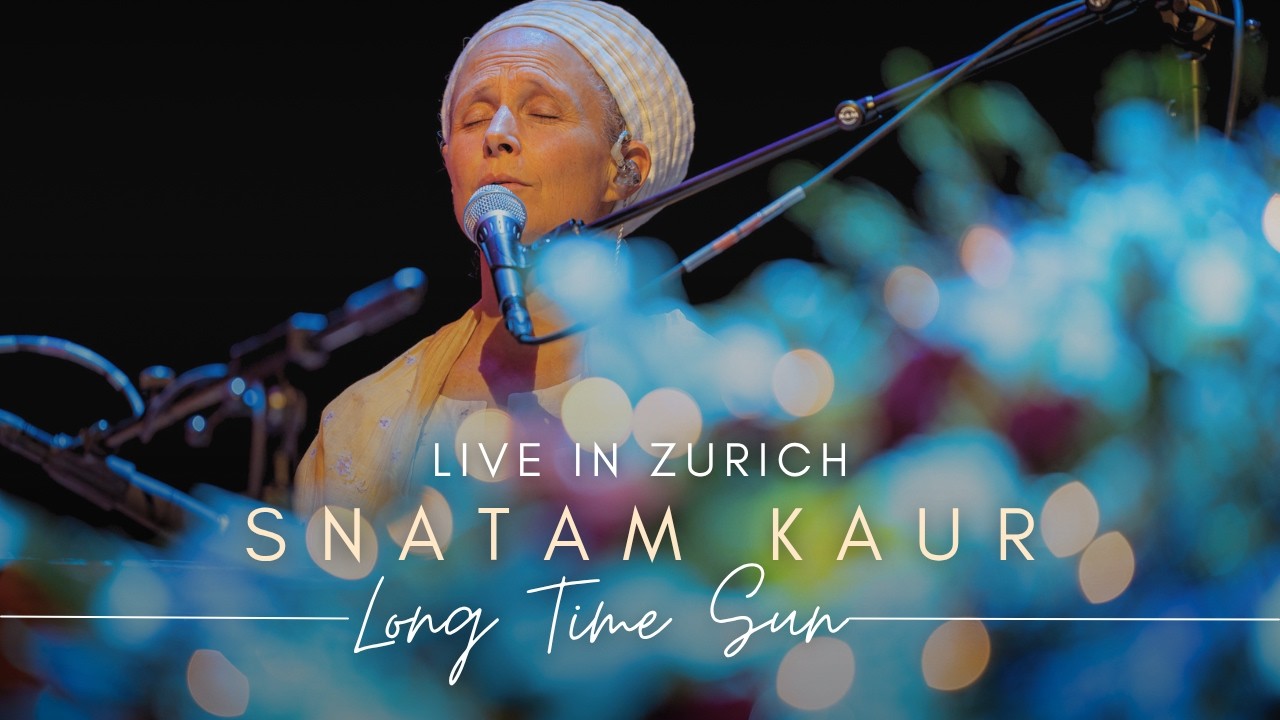
Long Time Sun: Kirtan and Blessing in Live Song
Featured

Long Time Sun: Kirtan and Blessing in Live Song

A live performance of the devotional blessing "Long Time Sun" recorded in Zurich featuring clarinet, three-part harmonies, and tabla.…

1 min read
How Sitting Still Proves You're Already Awakening
Featured

How Sitting Still Proves You're Already Awakening

Most people can't sit quietly without discomfort, but if you can, you're already further along spiritually than you realize. Eckhart Tolle e…

1 min read
Yemaya Reimagined: Ocean Goddess Chant Unites Voices
Featured

Yemaya Reimagined: Ocean Goddess Chant Unites Voices

A new duet celebrating the Yoruba ocean goddess brings together two voices in a healing chant born from serendipitous meeting in Costa Rica.…

1 min read

Keep exploring

Continue your journey

More wisdom and gatherings from across the BrightStar directory.

More Articles

Browse the full library of teachings, interviews, and guides.

Back to all articles →

Teachers & Artists

Explore the lineages, musicians, and guides of the conscious world.

Explore artists →

Find an Event

Kirtan, retreats, sound baths, breathwork, festivals — happening soon.

Browse events →