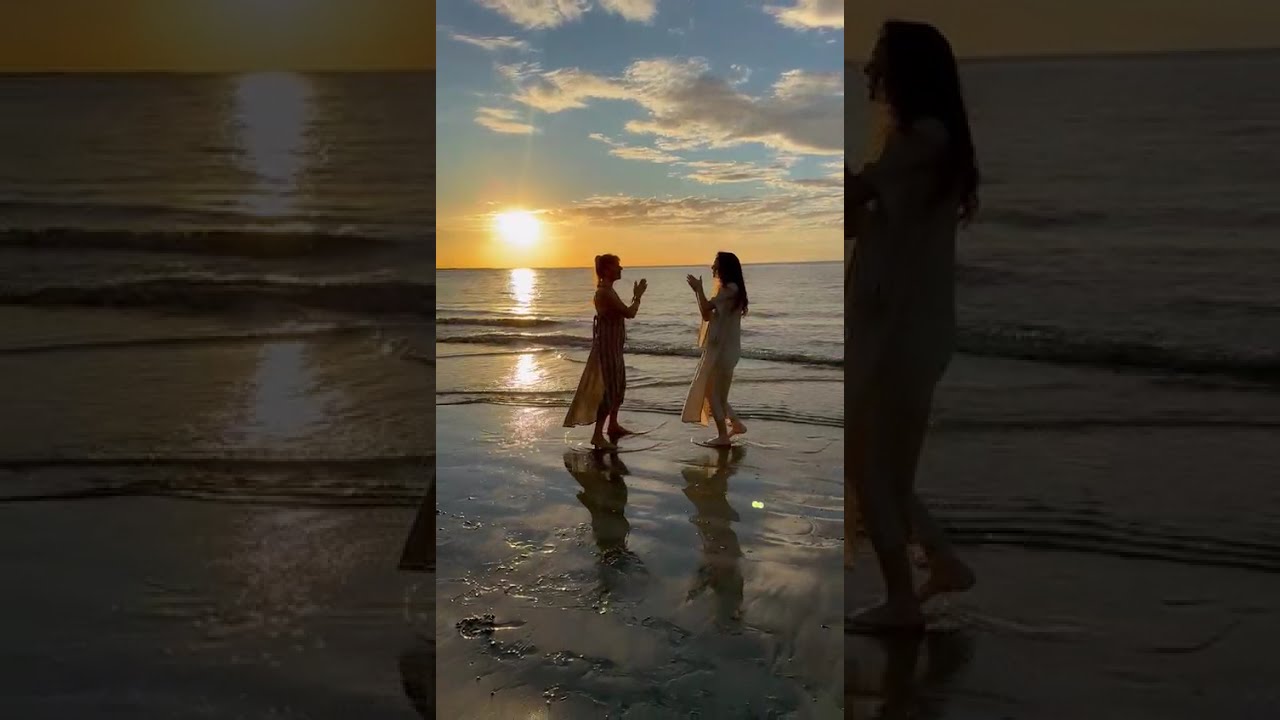
"Kiss the Earth (La Luna)" is a live kirtan performance by Ajeet recorded in Ludwigsburg that centers earth and moon reverence through call-and-response devotional singing. The performance brings together Sanskrit mantra tradition with contemporary spiritual practice, exploring how embodied chanting can deepen our relationship with the natural world. Through participatory singing, the work demonstrates kirtan as a gateway to ecological consciousness and felt connection to place.
What Is Kirtan and How Does It Work as Spiritual Practice?
Kirtan is a form of participatory devotional music rooted in Hindu and Sikh traditions, characterized by call-and-response chanting of mantras, names of the divine, and sacred syllables. In a kirtan setting, a lead musician—in this case, Ajeet—calls out a line or phrase, and participants respond together, creating a wave of shared vocal intention. The practice differs fundamentally from concert attendance: rather than listening passively, participants become co-creators of the sonic and spiritual field.
The mechanics of kirtan work on multiple levels. Phonetically, Sanskrit mantras are believed to carry specific vibrational frequencies; chanting them repeatedly is said to attune the nervous system and consciousness toward particular qualities or states. Psychologically, the repetition and group participation can induce states of flow, reduce self-consciousness, and create a sense of collective belonging. Physically, the act of singing engages the breath, activates the vagus nerve, and has been shown to lower cortisol and increase feelings of calm and connection.
Why Center the Earth and Moon in Spiritual Practice?
The title "Kiss the Earth (La Luna)"—invoking both earth and moon—signals an intentional turn toward ecological spirituality and earth-based reverence. In many spiritual traditions, the earth and moon are not merely physical bodies but conscious presences worthy of devotion and gratitude. This perspective stands in contrast to frameworks that position the divine as purely transcendent or otherworldly.
By naming earth and moon explicitly in the kirtan, Ajeet invites participants to direct their attention and affection toward the literal ground beneath their feet and the celestial body that governs tides, cycles, and circadian rhythms. This practice grounds spirituality in the sensory, material world—a direct antidote to purely abstract or disembodied spirituality. When we kiss the earth in consciousness or gesture, we acknowledge dependence, gratitude, and kinship with the living systems that sustain us.
The moon, too, holds particular power in spiritual and contemplative practice. Associated with the mind, intuition, cyclical time, and the feminine principle across many traditions, the moon serves as a symbol of inner light reflected from a greater source. Chanting in relation to the moon can deepen awareness of our own inner luminosity and our place within larger cycles of creation and renewal.
How Does Live Performance Shape the Kirtan Experience?
The designation "Live in Ludwigsburg" indicates this is not a studio recording but a live event captured in a specific place and time. This distinction matters significantly for the kirtan experience. Live kirtan generates what participants often describe as a collective energy field—a palpable sense of shared presence and intention that emerges when many voices move together in rhythm and melody.
In a live setting, the performer—here, Ajeet—responds in real time to the energy of the room, allowing the kirtan to breathe and evolve organically. The pacing, the length of phrases, the choice of melodies, and even the emotional tone can shift based on felt resonance with participants. This responsiveness creates a living, breathing experience rather than a fixed artifact. For participants, there is often a sense of being held by the collective voice, of one's individual voice becoming part of something larger.
Recording and releasing a live kirtan performance also serves a secondary function: it extends the reach of that moment. Listeners worldwide can encounter the same performance, accessing not just the melody and words but some residue of the intention and collective energy captured in that place and time. This mirrors how oral traditions have always functioned—knowledge and blessing transmitted through presence and sound.
What Role Does Earth-Based Spirituality Play in Contemporary Kirtan?
Contemporary kirtan artists increasingly address ecological consciousness and earth reverence alongside more traditional devotional themes. This reflects both a deepening awareness of environmental crisis and a recognition that indigenous and earth-centered spiritual traditions have always honored the living world as sacred.
By featuring "Kiss the Earth" as a released recording, Ajeet joins a growing movement of spiritual teachers and artists who center earth reverence as integral to spiritual practice rather than peripheral. This is not sentimental eco-spirituality but a direct assertion: that awakening to the earth as sacred, that gratitude for soil and water and seasons, and that commitment to reciprocal relationship with the natural world are spiritual imperatives, not optional add-ons.
The phrase "La Luna"—the moon in Spanish—may also signal an engagement with Latin American spiritual traditions and a pluralistic approach to sacred language. By mixing Sanskrit mantra with Spanish naming, Ajeet's work reflects the reality of contemporary spiritual practice as cross-cultural and hybrid, drawing wisdom from multiple lineages while remaining rooted in specific traditions.
How Can Listeners Approach This Recording?
For those unfamiliar with kirtan, this recording can serve multiple purposes. Listeners might approach it as meditative music, allowing the repetition and tonal qualities to settle the mind and nervous system. Others might chant along, using their own voice as an instrument of participation even in solitude. Still others might sit with the recording as an ambient spiritual practice, allowing the call-and-response structure to create a felt sense of connection to something larger than the individual self.
The earth-honoring intention embedded in the title and subject matter can also guide contemplative listening. One might listen while outdoors, with bare feet on the ground, allowing the chanting to deepen awareness of literal place and the body's contact with soil, grass, or stone. Alternatively, listeners might use this recording as a prelude to gratitude practice, allowing the celebration of earth and moon to inspire personal reflection on dependence, beauty, and reciprocal relationship.
The involvement of multiple musicians and production professionals—including Raffa Martinez and Siobhán Moore—suggests a sophisticated, professionally rendered performance. The recording quality and artistic care invite sustained listening rather than passive background consumption.
Where to Go From Here
To deepen engagement with kirtan practice, consider exploring Ajeet's broader discography and live events. Seek out live kirtan performances in your area, where the collective experience of call-and-response chanting can be felt in real time. Investigate the Sanskrit mantras used in this recording by researching their meanings and associated spiritual qualities. Read earth-centered spiritual traditions—from indigenous teachings to contemporary ecological spirituality—to contextualize how reverence for the earth fits within larger frameworks of awakening. Finally, experiment with your own relationship to the earth and moon through direct sensory practice: spend time barefoot on land, notice the phases of the moon, and consider what gratitude and care toward the living world might mean in your own life.