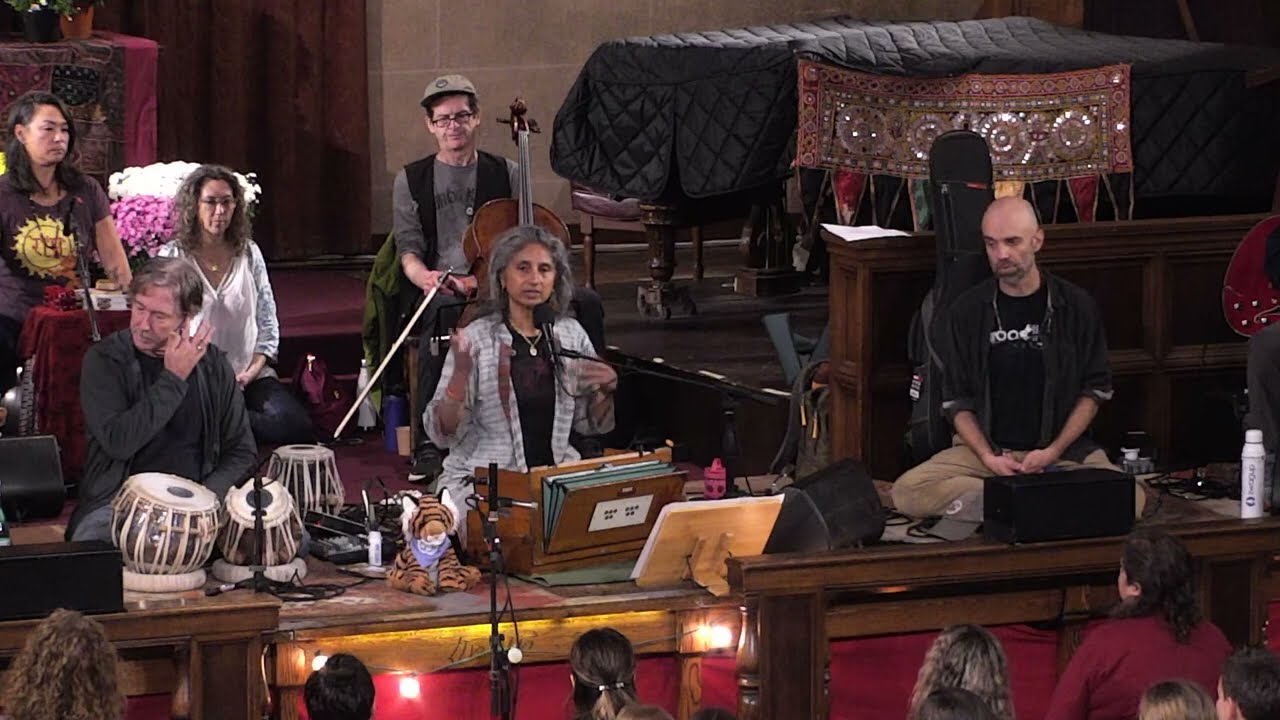
The Gayatri Mantra is a 1,500-year-old Sanskrit chant from the Rigveda, one of Hinduism's foundational texts, which invokes the divine light of the sun and the illumination of consciousness. Traditionally chanted at sunrise, it calls upon the universal creative force (Savitr) to awaken wisdom and clarity within the practitioner. The mantra operates through sound vibration and repetition, making it a central practice in Vedic meditation and a bridge between ancient Hindu wisdom and contemporary spiritual practice.
What Is the Gayatri Mantra and Where Does It Come From?
The Gayatri Mantra is among the most sacred utterances in Hinduism, appearing in the Rigveda (Book 3, Hymn 62), one of the oldest religious texts in existence. Its antiquity and widespread adoption across Hindu traditions—from Vedic priests to modern yoga practitioners—underscore its enduring spiritual power. The mantra has been chanted for thousands of years as a cornerstone of Vedic ritual and personal meditation practice.
The original Sanskrit verse is:
Om Bhur Bhuvah Svah
Tat Savitur Varenyam
Bhargo Devasya Dhimahi
Dhiyo Yo Nah Pracodayat
This concise formula encodes cosmological knowledge and spiritual intention, addressing Savitr, the Vedic deity of solar energy and creative illumination. Unlike a petition to an external god, the Gayatri functions as an invocation of universal light principles—a calling forth of the illuminative power already present within consciousness.
How Do Different Traditions Translate and Interpret the Mantra?
The Gayatri Mantra resists a single definitive English translation, in part because Sanskrit operates through layered semantic and vibrational meaning. However, common renderings include:
- Literal translation: "We meditate upon the divine light of Savitr, the brilliant solar deity. May this light illumine our intellect and awaken wisdom within us."
- Cosmological reading: The opening "Om Bhur Bhuvah Svah" invokes three realms of existence—physical, subtle, and transcendent—establishing a bridge between the material and infinite.
- Consciousness-centered interpretation: Rather than worshipping an external solar god, practitioners understand the mantra as invoking the light of consciousness itself—the illuminating intelligence that perceives all experience.
Vedic scholars emphasize that the mantra's power lies not in literal belief but in the precision of its phonetic construction and the mental focus it generates. Each syllable carries vibrational frequency designed to resonate with specific energy centers in the body and corresponding states of consciousness.
Why Is Sunrise the Traditional Time for Chanting?
The Gayatri Mantra is conventionally chanted at sunrise (Brahmamuhurta, approximately one hour before dawn), a practice rooted in both symbolic and physiological understanding. At dawn, the mind is naturally quieter, less burdened by the day's activity and distraction. The body's circadian rhythms support deeper inward focus, making meditation more stable and receptive.
Symbolically, sunrise mirrors the mantra's central invocation: the sun's rising represents the awakening of consciousness within the individual practitioner. Chanting at dawn aligns personal spiritual practice with the cosmic rhythm, creating sympathetic resonance between microcosm (the individual) and macrocosm (the universe).
Practitioners who maintain sunrise practice report heightened clarity, increased mental stability throughout the day, and a sense of connection to natural cycles. While chanting at other times remains valid—the mantra's power is not time-bound—the dawn practice amplifies its effects through alignment with natural rhythms.
What Are the Spiritual Benefits of Regular Gayatri Practice?
Consistent chanting of the Gayatri Mantra is said to cultivate several overlapping benefits:
- Mental clarity and focus: The mantra's rhythmic structure trains attention, quieting mental chatter and anchoring awareness in the present moment.
- Activation of the intellect (buddhi): The final line, "Dhiyo Yo Nah Pracodayat" ("awaken our intellect"), directly invokes the faculty of discrimination and wisdom, supporting better decision-making and insight.
- Energy alignment: Sound vibration is believed to activate subtle energy channels (nadis) and energy centers (chakras), particularly the third eye center associated with intuition and inner vision.
- Stress reduction and nervous system regulation: The meditative quality of chanting activates the parasympathetic nervous system, reducing cortisol and promoting a sense of inner calm.
- Spiritual protection and purification: In traditional Hindu understanding, the mantra's high vibrational frequency purifies mental and energetic patterns, creating a protective field around the practitioner.
These benefits accumulate through repetition. A common practice is to chant the mantra 108 times (a sacred number in Hindu tradition), or simply to integrate it into daily meditation as an anchor for awareness.
How Does Sound Vibration Work in Mantra Practice?
The efficacy of mantra rests on the principle that sound is vibrational energy with measurable physical and psychological effects. When chanted aloud or internally, the Gayatri Mantra creates vibrations that resonate through the body's subtle anatomy—the network of energy channels and chakras recognized in tantric and yogic philosophy.
Modern neuroscience corroborates some of these claims: chanting activates specific brain regions associated with attention, emotion regulation, and interoception (awareness of internal bodily states). The repetitive rhythm of mantra naturally induces a meditative state, slowing brainwave frequency toward alpha and theta ranges conducive to relaxation and insight.
The Sanskrit language itself is understood in Vedic tradition as specially constructed for spiritual transmission—each phoneme (sound unit) carries semantic and energetic meaning. The Gayatri's syllables are believed to encode not just intellectual content but vibrational templates that align consciousness with universal harmony.
What Are Common Misconceptions About the Gayatri Mantra?
A frequent misunderstanding is that the Gayatri Mantra requires specific religious faith or belief in Hindu gods to be effective. In reality, the mantra functions as a psychological and acoustic technology available to practitioners of any faith or none. The "deity" invoked (Savitr) can be understood as a personification of universal illuminative principle—consciousness, wisdom, creative energy—rather than a literal external god.
Another misconception is that results are instantaneous or depend on perfect pronunciation. While precision matters (Sanskrit phonetics are specific), the mantra's power accumulates through consistent practice over weeks and months. A sincere beginner's imperfect chanting will show benefits; perfection is not a prerequisite.
Some assume the mantra must be chanted only in Sanskrit or at prescribed times. While traditional practice emphasizes these elements, the underlying principle—invoking mental clarity and alignment with universal intelligence—can be accessed through humble, regular engagement regardless of one's linguistic precision or schedule constraints.
How Can Beginners Start a Gayatri Mantra Practice?
A simple entry point requires no special knowledge or resources:
- Learn the chant: Listen to established recordings (such as those by Donna De Lory or other respected teachers) to absorb the correct Sanskrit pronunciation and melodic form.
- Choose a time: Begin with early morning practice if possible, even 5-10 minutes before sunrise. If morning is impossible, any consistent time—midday, evening—works; consistency matters more than timing.
- Set an intention: Before chanting, briefly clarify your aim: spiritual growth, mental clarity, healing, or simple alignment with universal intelligence.
- Start small: Chant the mantra 3, 9, or 27 times daily (multiples of 3 are traditional). Use a mala bead necklace (108 beads) to track repetitions if chanting 108 times.
- Sit quietly afterward: Allow 5-10 minutes of silent meditation after chanting to integrate the practice and notice inner shifts.
- Be patient: Sustained benefits emerge over weeks and months. Trust the process without obsessing over whether it's "working."
Some practitioners integrate the Gayatri into existing yoga or meditation routines; others chant it standalone. Both approaches are valid. The mantra's accessibility—requiring no equipment, no fee, no membership—makes it one of the most democratic spiritual technologies available.
Where to Go from Here
If the Gayatri Mantra resonates with you, deepen your exploration by listening to recordings from established teachers like Donna De Lory, whose version from the album "The Unchanging" brings devotional musicality to the practice. Study the mantra's Sanskrit roots through Vedic commentaries or contemporary books on mantra philosophy. Most importantly, begin chanting—even imperfectly—and allow your own direct experience to reveal the practice's power. The Gayatri Mantra has sustained seekers for millennia; your own sincere engagement continues that lineage.